NYS Tourism Industry Association CEO Bob Provost: “Tourism is not a goal, it’s a means to an end.”
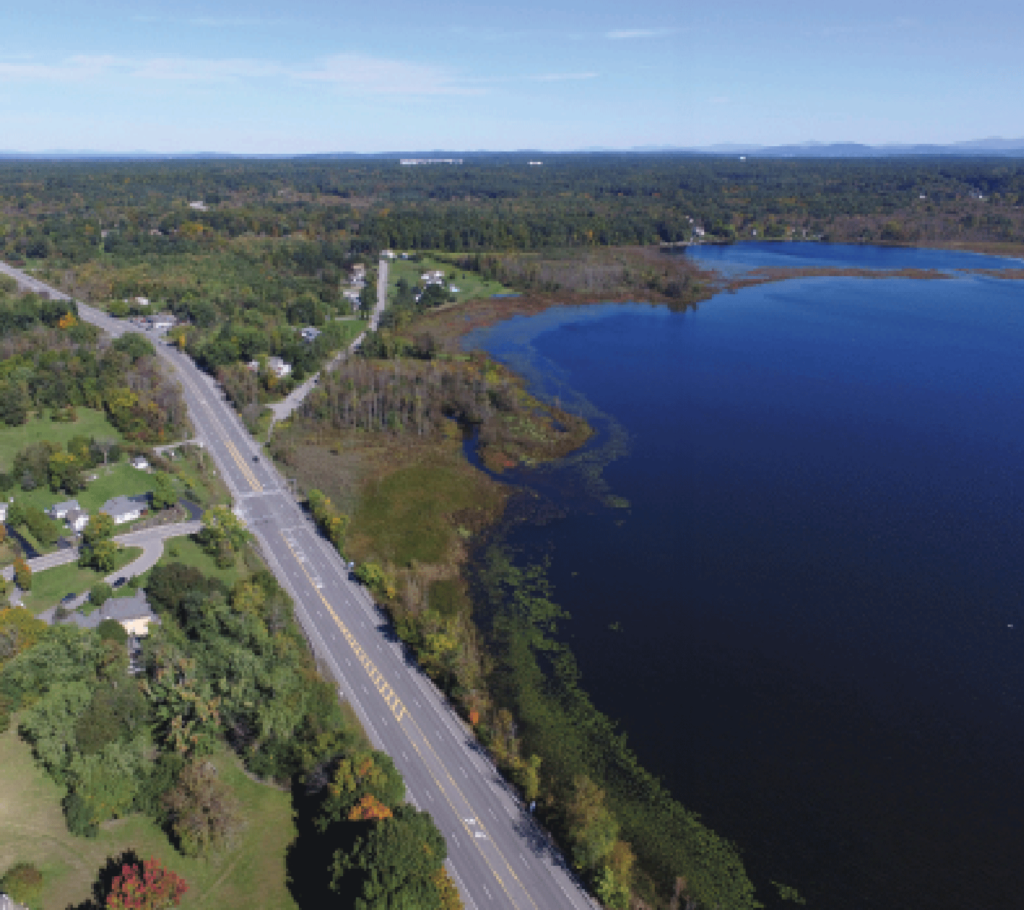
Photo by Super Source Media Studios.
Since joining the New York State Tourism Industry Association (NYSTIA)
as president and CEO in September 2018, Bob Provost has focused NYSTIA’s programming on cutting-edge marketing and data analytics, advocacy outreach, and transformational destination-stewardship strategies. He has enhanced member communications and collaborative initiatives and facilitated rebranding and the restatement of vision and purpose for the organization. Working with tourism industry members across the state, Washington, D.C., and Albany, he spearheaded response-and-recovery efforts during and following the pandemic. Post-pandemic initiatives for NYSTIA have included the creation of member task-force teams on sustainability, workforce development, and Inclusion, Diversity, Equity and Accessibility.
“Tourism is not a goal, it’s a means to an end,” asserts Provost.
Tourism powers:
- Economic growth
- Job creation
- Small-business success
- Community revitalization
- Increased local and state tax revenue
- Improved standard of living
- Quality of life
- Pride of place for destination communities and their residents.
NYSTIA’s membership includes the leadership of New York state’s county tourism promotion agencies, major urban and remote/rural destination marketing organizations, and key executives from major attractions, museums, resort hotels, and major marketing firms across the U.S and Canada.
Bob Provost, president and CEO,
“Upstate New York’s future has never been brighter or more promising. The pandemic forced travelers to seek the roads less traveled. They discovered an outdoor New York that they never knew existed. If we seize the moment, we will be the No. 1 destination for bikers and hikers, paddlers and pedalers. We have a whole new fan base for our museums, wineries, breweries and distilleries, attractions, ski areas, and campgrounds. My advice to my fellow tourism marketers? Carpe diem! Seize the day!”
New York State Tourism Industry Association
Q&A
(Walker) Q: Saratoga stands out in the region for many reasons, one of which is its brand as being on the edge of “Tech Valley,” based, in part, on the establishment of chip factory Global Foundries in Malta, as well as the proximity to Rensselaer Polytechnic Institute in Troy, which has spun off multiple tech-related businesses, with some located in Saratoga County. Where do you see this market going in the next decade? How should Saratoga go about drawing talent and companies to the region?
(Provost) A: The fact that Saratoga has invested in high-tech employment is widely recognized at the federal, state, and local government levels, bringing both financial support and high-profile representatives to the area to announce awards and applaud efforts. Local, state and federal leadership realizes we have to safeguard the U.S. global leadership by bringing local sourcing in tech manufacturing back to this country. We should also recognize that high-tech manufacturing is subject to rapidly evolving technology. A facility built for manufacturing today’s state-of-the-art tech products and components has a limited lifetime before what it’s producing becomes outdated. The facility will require reinvestment and you need to be prepared for that eventuality. Saratoga is advantaged with nearby nano-science research facilities developing the next generation of products as well as software development and business development. Your future tech options are more diverse and more secure than most. Saratoga also has a competitive advantage because it’s already a place people want to be and to live. Tourism has helped build a highly desirable place-brand.
Q: Why do people come to Saratoga in the first place?
A: Saratoga occupies a unique yet diverse place in our national identity. It played a historic role in the creation of the nation itself, developed into an early center of culture and high society, and continues to offer residents and visitors alike a robust and rewarding lifestyle experience. Saratoga features both high-tech industry and high-stakes racing, rich entertainment and equally rich dining options, and a great outdoors that offers four seasons of recreational opportunities. It’s a place visitors want to spend both their time and their money. For instance, it’s not common in other destinations for the traveler spending on food and beverage to be larger than their lodging expenditure, but that is the case in Saratoga. It speaks volumes about the robust and diverse dining experience Saratoga offers.
Q: This publication is geared toward CEOs, entrepreneurs, and management readership. Do you have any advice for them?
A: I spent my first four decades as a media executive, and as marketing director was a ‘change agent’ engaged in innovation (with the Times Union, an Albany-based Hearst newspaper). The key is to understand innovation is as much a matter of technique as it is technology. It can be about the culture that drives organizational behavior and the role it can play as a catalyst for positive change in the community. Tourism is one of the things that I have been involved with throughout my career because I recognized how it could rebrand and revitalize a community. Look at what SPAC and the Racetrack bring to market in Saratoga Springs and how that has grown over the years. A lot of dollars and jobs are driven by innovation, creativity, and inspired marketing, not by high tech.
Tourism is evolving and becoming more sophisticated and strategic. People used to think of tourism purely as more ‘heads in beds,’ but there wasn’t the sense of responsible stewardship, helping shape a better future for your community. Today, tourism leadership, if they’re doing their job well, involves leaving the community and the world a little better than you found it. At the end of your term of stewardship, you should look at what you started with and what you are handing off and take pride in what you’ve done for your community. You can derive satisfaction from a good paycheck and a good title, but the highest form of satisfaction is knowing you’ve done good for your community and your neighbors.

Canal NY Annual Meeting, December 2, 2022.
Q: What is the biggest threat to the visitor economy in Saratoga?
A: The same threat experienced in other popular destinations. Too often, elected leadership diverts tax revenues intended to fund tourism marketing and development to other purposes. They don’t realize that tourism is driven by ‘top-of-mind’ and ‘just-in-time’ consumer behavior. Reducing marketing pressure generates a disproportionate decline in spending and usually ends up reducing tax revenues and creating even greater budget problems! Tourism budgets need to be viewed as an investment that will generate multiple returns, not an arbitrary expense that can be redirected without consequences.
Most people think of visitor spending purely in terms of hotel lodging sales. In reality, only 29 cents out of the local travel dollars goes to lodging. The balance, over 70% of spending, goes to restaurants, retail establishments & attractions, and museums— which drive the economy but derive very little from tax dollars.
Also, New York State has one of the country’s best trail systems – the 750-mile Empire State Trail – which can take you from New York City to the Canadian border, or through the western part of the state.
Q: How did the COVID-19 pandemic affect tourism in Saratoga?
A: The COVID-19 pandemic definitely had impact. Saratoga County traveler expenditures dropped from $605 million in 2019 to $341 million in 2020, taking $264 million – over a quarter of a billion dollars in sales and tax revenue – out of the local economy. Most counties are still trying to get back to their 2019 pre-pandemic spending numbers. But Saratoga surged right back in 2021 and was 7.5 % ahead of 2019 with $650 million in travel spending. Of particular note is the fact that the Saratoga Chamber launched the award-winning initiative ‘Love Your Local,’ which won a New York State Tourist Excellence Award for being a creative, effective way to support post-pandemic recovery for local business and communities.
Thanks to the work of organizations like the Saratoga County Chamber of Commerce and Discover Saratoga, I think that when 2022 numbers are tallied, you will see even stronger travel spending numbers. Now that Saratoga can host conferences and group meetings, the Racetrack can return to a normal capacity, and tourism can fully resume its role as a primary economic and employment factor in the local economy.
Q: And retail? Is Saratoga still a shopper’s Mecca?
A: As far as retail, yes, people are spending money. We are looking at a jump from $192 million to $314 million overall. And, 6% of local employment is based in the Saratoga tourism labor market. Saratoga does a better job than most counties of attracting visitor spending and creating economic growth in the visitor economy. Approximately $650 million tourist dollars were spent in 2021; $201 million of it was on lodging and $232 million was on food and beverage, while about $95 million was spent on retail, $103 million was spent on recreation, and $25 million went to transportation (car rentals, Uber fares).
Saratoga is known for offering unique and different retail and dining experiences. Overnight visitors do not come to Saratoga to shop big box stores like Walmart and Home Depot. Dollars spent by tourists support unique, locally owned, locally operated stores, boutiques and food and beverage establishments. Visitors want to experience ‘local fare and flair’ and farm-to-table dining. They don’t travel here to dine in a chain restaurant they could visit in their home community.
In the regional context of regional travel spending, Saratoga rivals Albany County, which accounted for 38% of the total regional tourism spending in 2021. Saratoga was right behind Albany at 34%, followed by Schenectady at 16%. Fulton, Rensselaer, and Washington counties combine for the balance of 12%.
Q: What about real estate?
A: Saratoga has a huge second-home market – over $49 million was spent on vacation homes in 2021. Lots of people don’t think of second homes as a travel market, but in reality, only 30 cents on the dollar is spent on commercial lodging. When taxes are collected, $40 million goes back to local revenues, $38 million in tax revenue goes to the state. Without the visitor economy, how would Saratoga get that money back?
The downside is that bringing so much money in to purchase real estate can also have impacts like driving the price of real estate up to where it’s inaccessible to residents, which drives residents out of the community. But believe it or not, ultimately, Saratoga is still one of the most affordable tourist communities, especially if you think about the short-term rental market movement, which benefits new homeowners and retirees, who can rent out a room or home for a short time, or a young couple looking to acquire a vacation home – short-term rentals do provide a social benefit. Also, being allowed to rent out their place allows some people to become homeowners and/or stay in their homes and have a vacation home. Sometimes zoning regulations are what drive people out of where they’re living or want to live. Short-term rentals can be a very good thing – but not unchecked. It’s a balancing act.
Q: There’s been a lot in the news lately about safety in the streets. What’s your take on that?
A: Saratoga County, and Saratoga Springs specifically, is safe. How many really dangerous incidents are there? It’s so unusual in Saratoga that it’s a headline, and it’s appropriate to focus public attention on safety. But it involves or impacts an infinitesimal number of people who visit Saratoga, if it impacts them at all.
However, it is an issue for the city to resolve, as it impacts how people perceive the community. We can preach the gospel of stewardship in tourism and seek local input so the community understand goals and potential and pursues them in a in responsible and pragmatic manner, with a plan meant to be dynamic, because things change – but if you don’t have a long-term plan dealing with infrastructure, if you don’t maintain and manage what’s good about the status quo, if you don’t have the vision to know how the community can grow and flourish sustainably, people will pass you by as a destination. Tourism marketing has been referred to as the process of importing money – and not just during the intense summer visitor season. You have to brand year-round, and that includes being a safe place to visit. Tourism leadership isn’t going to solve the late-night crime problem, but it needs to be part of the group that calls for action and directs attention to what is wrong and the negative impacts entailed.
Q: How would you describe the mission of tourism and why you have dedicated your work life to promoting it?
A: Tourism is not a goal, it’s a means to an end, a catalyst and a driver of economic growth, job creation, small-business success, and community revitalization. When it’s done responsibly with a sense of stewardship, local residents benefit from an improved standard of living and quality of life and develop greater pride of place. You see, the real customer of tourism is the resident. Ultimately, tourism will bring visitors who, based on their visitor experience, also desire to live and work here – even relocate a business here.
In some places, people have lost track of that; in Saratoga, people have not!