

Catamount Consulting: Building Better Leaders, Safer Workplaces, and Thriving Businesses
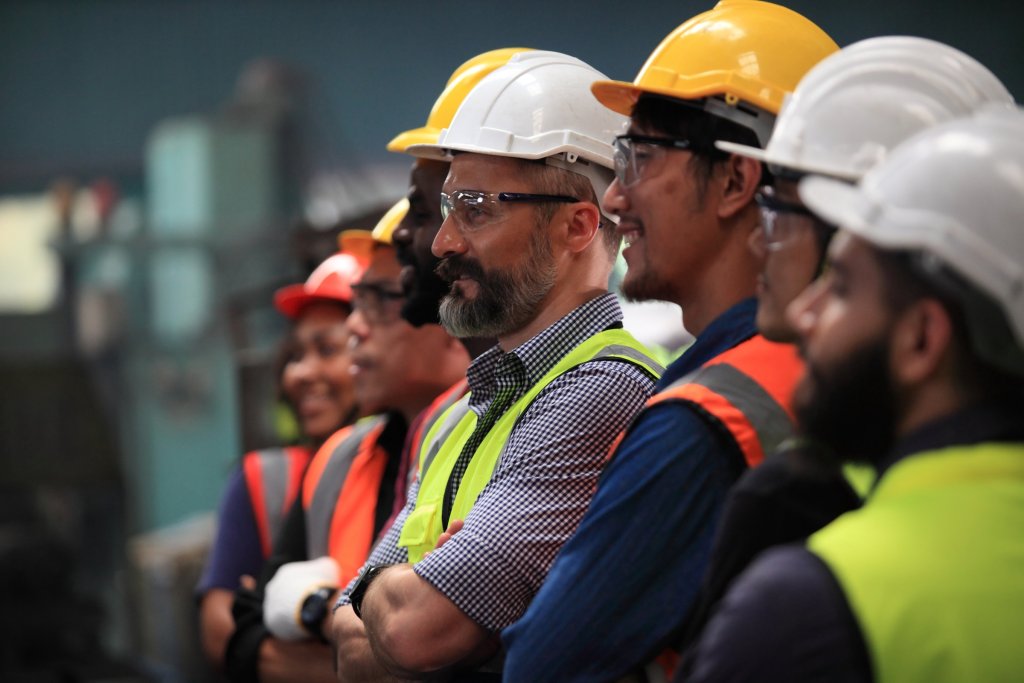
In the rugged landscapes of Warrensburg, New York, a small company with a big vision took root in 2005. Catamount Consulting, founded by Scott McKenna, emerged from humble beginnings in the mining industry to become a nationwide leader in safety and peak performance training.
McKenna says, “It is important to stress both of those based on our ‘People First’ approach because you need both to be successful.” Over the past two decades, Catamount has grown from a one-man operation into a dynamic team of experts, offering tailored solutions to small and medium-sized businesses across industries as diverse as mining, construction, and beyond. With satellite offices and team members stretching from North Carolina to Vermont, the company’s mission remains steadfast: to empower businesses with practical, affordable, and high-impact training programs that foster safety, engagement, and growth.
From the Mines to the Marketplace: A Founder’s Journey
Scott McKenna’s story is one of grit, adaptability, and an unrelenting drive to improve the world around him. A collegiate wrestler turned college dropout, McKenna traded textbooks for hard hats in the late 1990s, diving headfirst into the mining industry. His first gig involved stacking two-ton pallets of rubblestone—rock harvested for fireplaces and walkways—a job that tested his physical endurance and sparked a lifelong fascination with the raw power of the earth. But it wasn’t just the rocks that captured his attention; it was the people working alongside him and the risks they faced daily.
During the late ’90s, additions to safety regulations in high-risk industries like mining, driven by agencies such as the Mine Safety and Health Administration (MSHA) and the Occupational Safety and Health Administration (OSHA). McKenna found himself tasked with overseeing safety practices at his operation, a role that opened his eyes to a troubling reality: workplace accidents and inadequate safety measures were all too common. Drawing on his wrestling background and over a 20 year career in high school coaching —where teamwork, discipline, and personal growth were non-negotiable—he saw an opportunity to bridge the gap. “I recognized the value of strong leadership and teamwork,” McKenna recalls in a recent episode of Blue Collar StartUp. “Those principles from the mat could translate anywhere.”
In 2005, armed with a business plan and a vision, McKenna founded Catamount Consulting. What started as a solo venture dabbling in safety training for mining operations quickly snowballed into something bigger. He bought out his silent partner after five years and began scaling the company, adding staff like Heidi, his first hire and a former loader operator turned office manager, who remains a cornerstone of the team today. “It was just me and her in the early days, figuring it out,” McKenna reflects. From there, Catamount expanded its offerings, tapping into new revenue streams such as construction safety, rigging, Department of Transportation (DOT) compliance, and workplace violence prevention. But the real game-changer came when the company pivoted toward leadership training—a move that would redefine its impact.


The Hidden Cost of Disengagement
Catamount’s evolution into leadership development wasn’t just a business decision; it was a response to a pervasive problem plaguing American workplaces. A 2024 Gallup poll paints a grim picture: employee disengagement costs U.S. businesses between $450 billion and $550 billion annually in lost productivity. On average, each disengaged employee drains $2,246 from their employer every year. The ripple effects are staggering—disengaged teams experience 37% more absenteeism, 18% lower productivity, and 15% reduced profitability. Worst of all, only 30% of workers are actively engaged, the lowest figure in over a decade.
These numbers hit home for McKenna and his team. “The reality is that being a good leader is a skill,” he told Saratoga Business Report. “It can be learned, improved, and refined. And when you have great leaders, it trickles down—employees perform better, they want to be there.” Catamount’s philosophy hinges on a bold claim: leadership and management drive at least 70% of employee engagement. In high-risk industries like mining and construction, where a single misstep can mean injury or worse, an engaged workforce isn’t just a luxury—it’s a lifeline.
Leadership as the Key to Safety and Success
At its core, Catamount Consulting believes that safety, productivity, and quality are byproducts of strong leadership and emotional intelligence. “You can train people on rules and regulations all day,” says Stacy Spector, the company’s leadership training and curriculum development expert, in the Blue Collar StartUp podcast. “Why do people still do things that they know are unsafe? It’s a lack of engagement—and that starts with leadership.”
Spector, a former real estate attorney who traded a 20-year legal career for a chance to make a deeper impact, brings a unique perspective to the team. Her shift from law to leadership training was fueled by a desire for personal growth and a rejection of the toxic, high-stress culture she had endured. “I didn’t want to retire as an attorney,” she explains. “I needed an out—for my well-being and to be the best version of myself.”
Together, McKenna and Spector have crafted a leadership training model that’s as practical as it is profound. Rather than focusing solely on business jargon or corporate buzzwords, Catamount’s programs dive into what it means to be a better human—whether as a leader, parent, or spouse. “It’s about human connection,” Spector says. Whether you’re a middle school wrestler or miner, we all have the same needs for human connection”. Influenced by the works of Abraham Maslow and his Theory of Human Motivation, one of Catamount’s core leadership training principles is that leaders must create environments that support their people’s psychological needs of esteem and belonging. This truly is the “People First” approach.
The company customizes its offerings to fit each client, from single keynote sessions to more extensive immersive courses, delivered in person or online. Topics range from conflict resolution to culture-building, with a heavy emphasis on emotional intelligence, vulnerability, and resilience—skills McKenna calls “mental toughness, grit, and grind.”
A Coaching Mindset in a Business World
Catamount’s approach is deeply rooted in McKenna’s wrestling days and the belief that everyone needs a coach. “We run the business like we’re coaching a wrestling program,” he says. “I’m a college dropout—no degree, no formal business schooling. It’s all hard knocks: get up, keep going, work harder.”
This mindset permeates the company’s culture and its training philosophy. Spector echoes this, citing three foundational truths for peak performance: people are flawed, mindset is everything, and everyone needs a coach. “I relied on coaches to leave law,” she admits. “They helped me change the narrative when self-doubt crept in.”
Looking Ahead: Growth with Purpose
As Catamount Consulting approaches its 20-year milestone, McKenna’s ambitions show no signs of slowing. With a team of over 20 which includes employees and a network of expert subcontractors, the company operates with agility, serving clients nationwide from its East Coast hubs. “We want to keep expanding into more areas of business,” McKenna says. “That means hiring more experts and working in industries where consulting might not yet be prevalent. We’re excited about the future.”
For businesses ready to tackle disengagement, boost safety, and unlock growth, Catamount Consulting offers a roadmap. To learn more, visit www.catamountconsultingllc.com or connect with them on Facebook and Instagram.