The Renaissance of Raw Milk: A Visit to Willow Marsh Farm Store
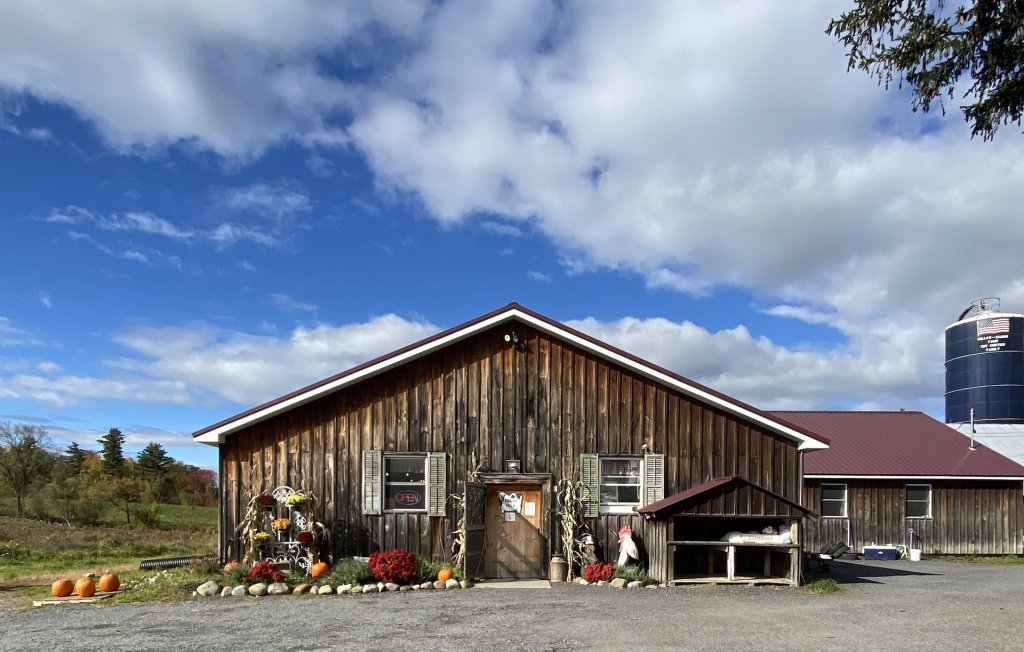
Nestled in the serene town of Ballston, New York, Willow Marsh Farm Store exemplifies a growing movement toward local, unprocessed food that prioritizes quality over quantity. Operated by Sara and Chuck Curtis, this family-run enterprise has become a beacon for those seeking healthier, more transparent alternatives to mass-produced grocery store staples. On a crisp March day in 2025, I sat down with Sara and Chuck to discuss their journey, the rising popularity of raw milk, and a recent brush with listeria that tested their resilience.
From Humble Beginnings to Community Hub
Willow Marsh Farm Store has been a fixture in the community for over a dozen years, but its roots stretch back even further. Chuck, who oversees the farm side of the business, has been in the dairy game his entire life. Seventeen years ago, he began selling raw milk straight from a refrigerator in their garage—an honor system where customers left a few bucks and signed a notebook. Today, that modest endeavor has blossomed into a bustling farm store managed by Sara, offering not just raw milk but a variety of products from local farms and small businesses.
The store’s evolution mirrors a broader shift in consumer awareness. “When COVID happened, everybody was like, ‘How do I boost my immune system?’” Sara recalls. While other businesses struggled, Willow Marsh saw demand skyrocket, doubling its customer base through word-of-mouth alone. “We still don’t advertise,” she says with a smile, a testament to the power of community trust.
Chuck attributes this surge to a growing recognition of raw milk’s benefits. Unlike pasteurized milk, which undergoes heat treatment that strips away some nutrients and enzymes, raw milk retains its natural state. “People are becoming aware that things like raw milk are a lot healthier for you,” I note, a sentiment Chuck and Sara echo. Customers, some driving hours to reach the farm, rave about the taste—Chuck likens it to “drinking ice cream”—and the peace of mind that comes from knowing exactly where their food comes from.
The Art of Quality Over Quantity
At Willow Marsh, the focus is on flavor and cow welfare, not mass production. Chuck explains their deliberate approach: “We do not feed for high production. We feed for high-quality taste.” Their cows produce about 40 pounds of milk daily—65% of the national average for dairy farms—because high-protein diets that boost output compromise flavor and stress the animals. “When I was milking cows just to milk cows, I was averaging nearly 90 pounds a cow a day,” Chuck says. “It’s extremely stressful on the cows and the farmer. Now we’re all kind of relaxed.”
This relaxed ethos extends to their herd of 22 milking cows, whose diets of baleage hay, grass hay, alfalfa, and corn silage are tailored for optimal taste. The result? A creamy, rich milk that customers can’t get enough of, filling 70 to 80 gallons of jugs daily—a process that now takes hours rather than minutes.
A Listeria Scare and a Commitment to Transparency
Despite their meticulous care, Willow Marsh recently faced a challenge that underscores the complexities of raw milk production: a single bulk tank sample tested positive for listeria, one of five pathogens banned in all food products. “We’re sampled every month—milk samples, water samples—and under constant premise inspections,” Chuck explains. When the positive result came back two weeks prior, it triggered a detective-like investigation.
Listeria, an environmental bacterium, can lurk anywhere—wet hay, soil, even a stray flake in the wash system. Yet subsequent tests, including a herd survey by Quality Milk Production Services (a collaboration between New York State and Cornell University), found no trace of it in individual cows or follow-up samples. “We’re never going to know,” Sara admits. “It came back negative, so we’re good to go, but it’s puzzling.”
The incident highlights the farm’s rigorous sanitation protocols. Cows are pre- and post-dipped with iodine, their udders cleaned with chlorinated, soapy water before automated milking units extract the milk. The equipment undergoes a three-stage clean-in-place process—rinse, caustic chlorinated wash, and acid rinse—before each milking, ensuring surgical cleanliness. Milk is filtered, cooled to 38°F in a bulk tank, and bottled on a grid to avoid floor contact. “I want the milk to taste good,” Chuck says. “If it’s good enough for me, anyone can drink it.”
For 17 years, this was their first listeria incident—a remarkable track record. Still, the media’s portrayal stung. “It sounded like you’re running a dirty creamery,” I note. Chuck shrugs it off: “That’s the image the public gets on any kind of food recall—lettuce, hot dogs, chicken. It’s everywhere.”
Educating the Next Generation
Beyond milk, Chuck and Sara are passionate about bridging the knowledge gap between farm and table. “People don’t understand how a cow makes milk,” Chuck laments. He offers a quick primer: cows consume 70-80 pounds of feed and 40-50 gallons of water daily, processed through their four-compartment stomachs. Nutrients travel via the bloodstream to the udder’s alveoli glands, producing milk for a calf after a nine-month gestation—much like humans. Milking sustains production, but cows get a 50-60 day “dry period” before calving again, a cycle staggered to keep the farm running year-round.
Chuck dreams of mandatory agricultural education in schools, especially urban ones. “They’ll understand how a tomato is grown, why a cow moos,” he says. “A kid here and there will be fascinated and want to learn.” With vast swaths of farmland lying vacant, he sees untapped potential for a new generation of farmers.
A Community of Farmers
Willow Marsh isn’t just about milk—it’s a hub for local producers. Sara stocks eggs from D&J Farms and Thomas’s Poultry Farm, ghee, teas from Jessica’s Old Wisdom Wellness, and sausages from Perlo Sausage, alongside their own veal and beef. “We want to support our community,” she says, even helping other businesses scale by sharing contacts. “A rising tide raises all ships,” I quip, and Chuck agrees: “The more farm stores out there, the more it draws people away from big box stores.”
This cooperative spirit reflects a broader trend. Post-COVID, consumers are reading labels, questioning chemicals, and seeking local alternatives. “People are realizing, ‘Eat processed food, you’re not gonna be around long,’” Sara notes. Willow Marsh, with its transparent practices and farm-fresh ethos, is at the forefront of this shift.
Looking Ahead
Scaling up isn’t easy—adding cows means more barns, feed, and labor—but Chuck and Sara aren’t in it for the money. “You don’t choose to be a farmer thinking you’re ever going to make any,” Sara laughs. They’ve resisted workarounds like selling milk as “pet food” for off-farm distribution, valuing honesty over profit. “We’re so transparent here,” she says. “It’d feel dishonest.”
For those intrigued, Willow Marsh Farm Store welcomes visitors at willow-marshfarmstore.com or on Facebook and Instagram (@WillowMarshFarmStore). Located in Ballston, it’s a 20-minute drive for some, a pilgrimage for others. As Chuck sums it up, “If you want information, look us up. We’re here.” In an era of industrial food, their story is a refreshing reminder of the pride—and flavor—that comes from knowing your farmer.
