
Raising Chickens with Integrity: Arthur and Melanie Kraamwinkel’s Mission at Hepatica Farm
Located in Greenwich, New York, Hepatica Farm is the realization of a dream. Founded and operated by Arthur Kraamwinkel, a former full-time mental health counselor turned full-time farmer, along with his wife and equal business partner Melanie Kraamwinkel, the farm is a living testament to regenerative agriculture, animal welfare, and the ethics of truly honest food.
Arthur didn’t grow up farming. His roots are in the Netherlands, where he was raised in a city but found himself drawn to the rhythms of farm life from a young age. Inspired by his grandfather’s biodynamic farm, Arthur has always held a deep respect for nature and a desire to be part of it. That respect has shaped every inch of Hepatica Farm.
Melanie, a practicing dietitian, may not be involved in daily farm chores, but her role is no less vital. She works the Saratoga Farmers Market each Saturday and contributes meaningfully to the strategic and management decisions that guide the farm. Together, Arthur and Melanie navigate the complexities of running a small, mission-driven agricultural business.
The Poultry Foundation
While Arthur’s long-term vision is a diverse, multi-species operation, poultry has provided the foundational building block. Chickens offer a relatively short investment-to-return cycle, making them a financially viable entry point for a startup farm. In 2025, Arthur is raising over 6,000 pasture-raised chickens on his property—no small feat for a one-man operation.
But raising chickens the way Arthur does is nothing like the industrial model. “It’s much more work,” he says, but he wouldn’t have it any other way.
Pasture-Raised Done Right
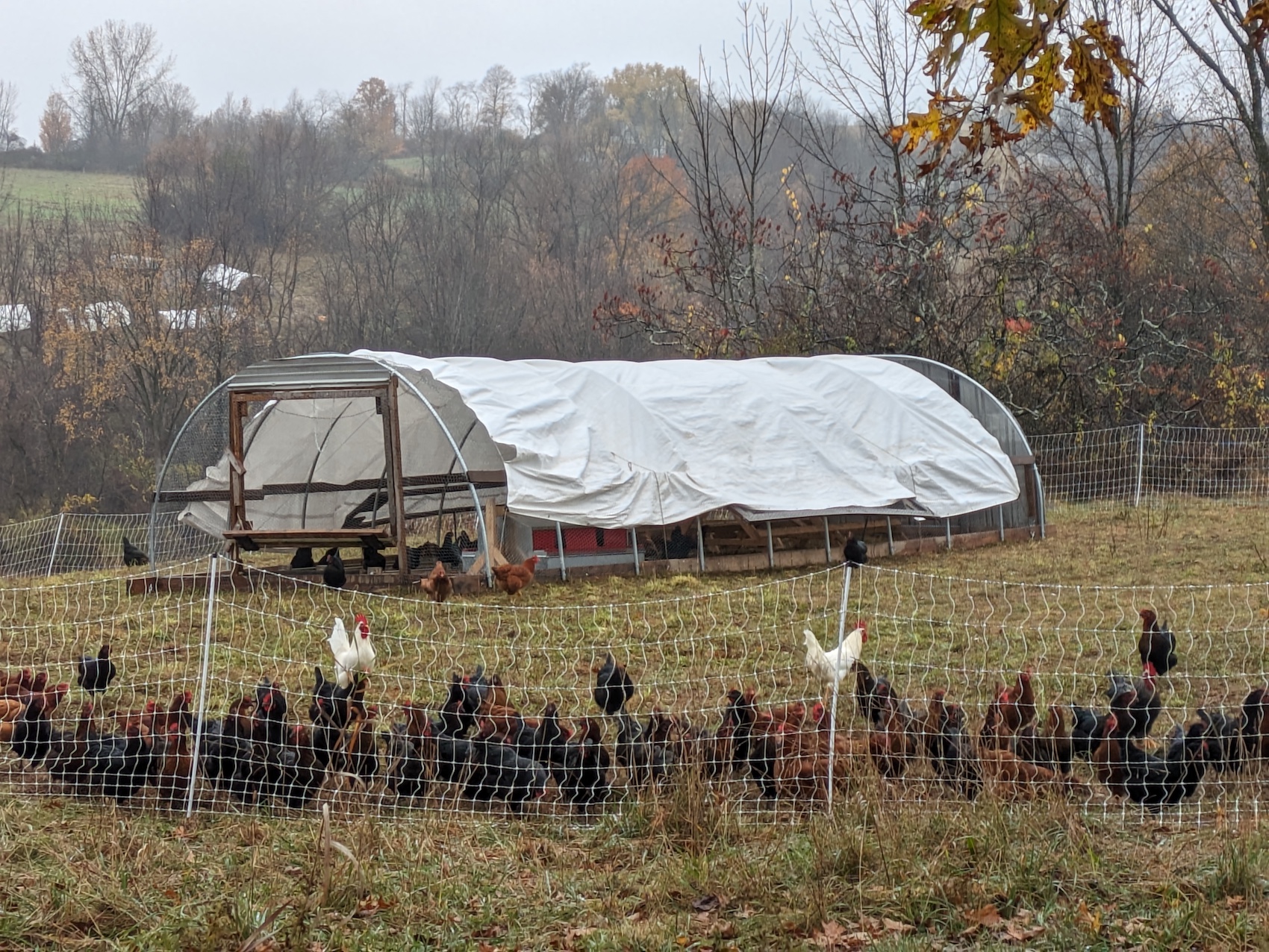
Hepatica Farm chickens live on pasture from three weeks of age until their final days. Housed in custom-built, mobile “schooners” that Arthur designed himself using local materials, the chickens are moved daily to fresh ground. This movement ensures access to clean forage and prevents waste buildup, which means healthier birds and healthier land.
This isn’t just about animal welfare—it’s about soil regeneration. As the birds graze and leave behind manure, they fertilize the fields naturally, restoring pastures that had once been depleted from years of hay production.
“We’re regenerating the land with the birds,” Arthur explains. “I’m not buying fertilizer—I’m earning income while putting nutrients back into the soil.”
A Higher Standard Than Organic
While Hepatica’s poultry is certified organic, Arthur’s commitment goes well beyond the minimum requirements. He uses locally grown, organic feed from the Hudson Valley to reduce transport emissions and ensure quality. Unlike many organic feeds that still include synthetic amino acids like DL-methionine (a byproduct of oil and natural gas), Arthur’s feed is 100% natural. This makes his product more expensive to produce—but far healthier.
“There’s a lot of food that looks like what you think it is, but really isn’t,” he says. “I feel morally obligated to produce something that’s actually food—an honest, healthy product.”
His birds are also processed at Maple Wind Farm in Vermont, one of the rare USDA-certified organic poultry processors that uses air-chilling and lactic acid instead of the chlorine baths common in commercial operations. The result is a better-tasting, safer chicken.
The True Cost of Cheap Food
Arthur is passionate about educating customers on what goes into a $5 grocery store chicken breast. He highlights the hidden societal costs—pollution from synthetic fertilizers, health impacts from synthetic proteins, the environmental toll of long-distance transport—that rarely get factored into the price tag.
“If you add up the true costs, the health costs, the environmental costs, what I charge is actually much closer to the real price of food,” he says.
This emphasis on transparency extends to every aspect of the farm, from untreated locust fence posts split by hand to his openness about the economics of small-scale farming. He’s scrappy, as he puts it, not just for survival—but because he believes in doing things the right way.
Why Pasture-Raised Matters
Unlike conventional or even some organic operations that keep birds indoors with minimal outdoor access, Arthur’s birds live outside—soaking in sunlight, foraging for bugs and plants, and contributing to the ecosystem. Studies show that pasture-raised poultry is more nutrient-dense, with higher levels of omega-3s, vitamin D, and antioxidants compared to their confined counterparts.
It’s also better for the land. Arthur has noticed an increase in birdlife and pollinators around the farm since beginning his daily move rotations. “I didn’t used to hear so many birds,” he notes. Now, their songs are a constant backdrop, a sign that the land is healing.
More Than a Farm, It’s a Philosophy
Farming this way isn’t easy—or cheap. It’s labor-intensive, high-risk, and physically demanding. But for Arthur, it’s a labor of love.
“There’s a deep respect for nature in everything I do,” he says. “I don’t want to manipulate it to serve me. I want to work with it.”
That ethos extends to his customers, too. Arthur believes food should be honest, not just in labeling, but in how it’s grown, handled, and brought to market. He hopes more people will understand that buying local, pasture-raised food isn’t just better for their health—it’s an investment in their community and the planet.
Where to Find Hepatica Farm Products
Hepatica Farm sells at the Saratoga Farmers Market every Saturday and is stocked in several regional stores, including Pitney Meadows in Saratoga Springs, Cambridge Co-Op, and Random Harvest in Columbia County. The farm doesn’t have a dedicated store yet, but visitors are welcome by appointment through the website: www.hepaticafarm.com.