

Building Better Businesses Through Process: A Conversation with Paul Graver of Exsetis
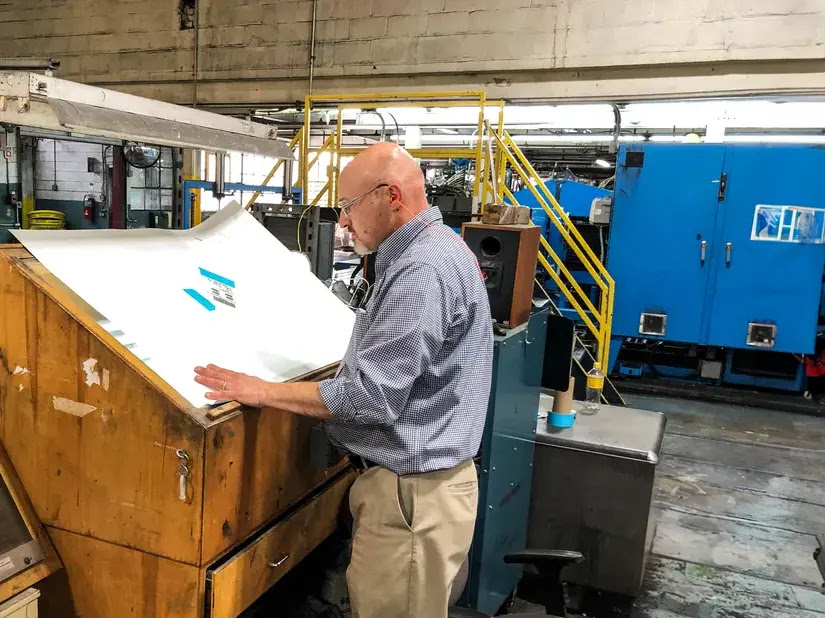
In the world of small and mid-sized businesses, success often depends less on vision and more on execution. Paul Graver, founder of Exsetis, a process improvement and quality systems consulting firm, has built his career on helping companies move beyond chaos and build sustainable systems for growth. With more than three decades of experience in manufacturing—much of it in the paper industry—Graver brings a practical, hands-on approach to business improvement.
From Manufacturing to Consulting
Graver’s professional journey began in the paper mills of upstate New York. He cut his teeth at International Paper in Corinth before moving on to other mills, eventually spending two decades with Mohawk in Cohoes, New York. Over the years, he mastered not only the technical side of paper production but also the critical importance of process. Whether producing white stock or deep-colored specialty papers, every adjustment required precise systems to maintain efficiency and quality.
That background provided the foundation for Exsetis. Today, Graver applies the discipline of manufacturing to help businesses of all sizes—whether they make physical products or deliver services—clarify their processes and build structures that last.
Why Process Matters
“Without process, you have chaos,” Graver explains. Many entrepreneurs start with passion and vision, which is essential. But without a roadmap for how tasks are performed, who communicates with whom, and how results are measured, businesses quickly get bogged down. Shipments are missed, employees become frustrated, and leaders find themselves dragged into daily “Hey Mike” scenarios—named after the constant interruptions he once experienced as a bar owner, where staff continually asked, “Hey Mike, what do I do now?”
Process, he says, is the antidote. Documented systems empower employees, reduce reliance on the owner’s memory, and create a backbone to withstand the unpredictable challenges of real-world operations.
The Exsetis Approach
Graver’s consulting doesn’t start with lofty mission statements or abstract strategy. Instead, he works from the ground up, mapping out how work actually gets done.
“We’ll sit in a room, grab an empty wall, and put up colored Post-it notes,” he says. “That’s your process. You can move them around, add scenarios, and build out different pathways for what happens when things don’t go perfectly.”
From there, he helps clients overlay reality onto the “ideal world” process, identifying where redundancies, gaps, or bottlenecks occur. Importantly, these living documents evolve into training tools, quality checks, and systems for measurement.
Measurement is central to his philosophy. “In order to grow something, you have to be able to measure it. And in order to measure it, you have to track it,” Graver emphasizes. Whether it’s turnaround time for a service business or defect rates in manufacturing, the right key performance indicators (KPIs) help leaders make informed decisions, improve efficiency, and ultimately boost profitability.
Keeping It Simple—and Sticky
One of the pitfalls he often sees is overcomplication. Processes that become long, wordy manuals tend to be ignored. “It has to be a useful tool, or it won’t be used,” he notes. Instead, Graver encourages simplicity: bullet points, visuals, and summaries that employees can easily absorb.
Equally important, processes must align with the culture—or “personality”—of the business. Every small business has its own rhythm, shaped by the owner’s style and the team’s interactions. What works in one environment might flop in another. Exsetis helps companies build systems that are tailored, flexible, and adaptive.
Adapting for the Future
Technology has transformed the landscape since Graver first entered the workforce. In manufacturing, sensors and automated reporting have replaced manual checks, providing leaders with real-time data to make better decisions. Today, artificial intelligence is beginning to play a similar role, offering new tools for analysis and idea generation.
Still, he cautions against rigidity. While some industries, like medical device manufacturing, require strict compliance, most businesses benefit from leaving room for creativity and innovation. “Don’t let the process own you,” Graver says. “Own your process. Leave space for people to improve it, adapt it, and make it better.”
Beyond Manufacturing
Although Graver’s heart is rooted in manufacturing, his consulting extends far beyond it. He’s able to work with law firms, service providers, and other non-manufacturing companies. Regardless of industry, the principles remain the same: clearly defined processes lead to better outcomes, happier employees, and healthier bottom lines.
Interestingly, he differentiates between business plans and processes. A business plan, he points out, might secure funding, but it doesn’t explain how day-to-day operations will function. Processes, on the other hand, determine whether a company can actually deliver on its promises.
A Message for Business Owners
For Graver, the takeaway is simple: start somewhere. Processes don’t need to be perfect at the outset. In fact, they shouldn’t be. They should evolve with the business, improving over time as new challenges and technologies emerge.
“Progress, not perfection,” he advises. Even basic outlines can empower teams, reduce chaos, and free leaders to focus on growth instead of firefighting.
Conclusion
Paul Graver’s work through Exsetis embodies a truth that many business owners overlook: vision inspires, but process sustains. By drawing on decades in manufacturing and a practical, hands-on approach, he helps companies transform their operations from reactive and chaotic to structured and scalable.
In an era where technology evolves rapidly and business landscapes shift overnight, Graver’s message is clear: success doesn’t come from guessing or improvising. It comes from building a strong foundation of process—one that allows people, products, and profits to thrive.