

James Bruchac Brings Winter Survival Back to Ndakinna
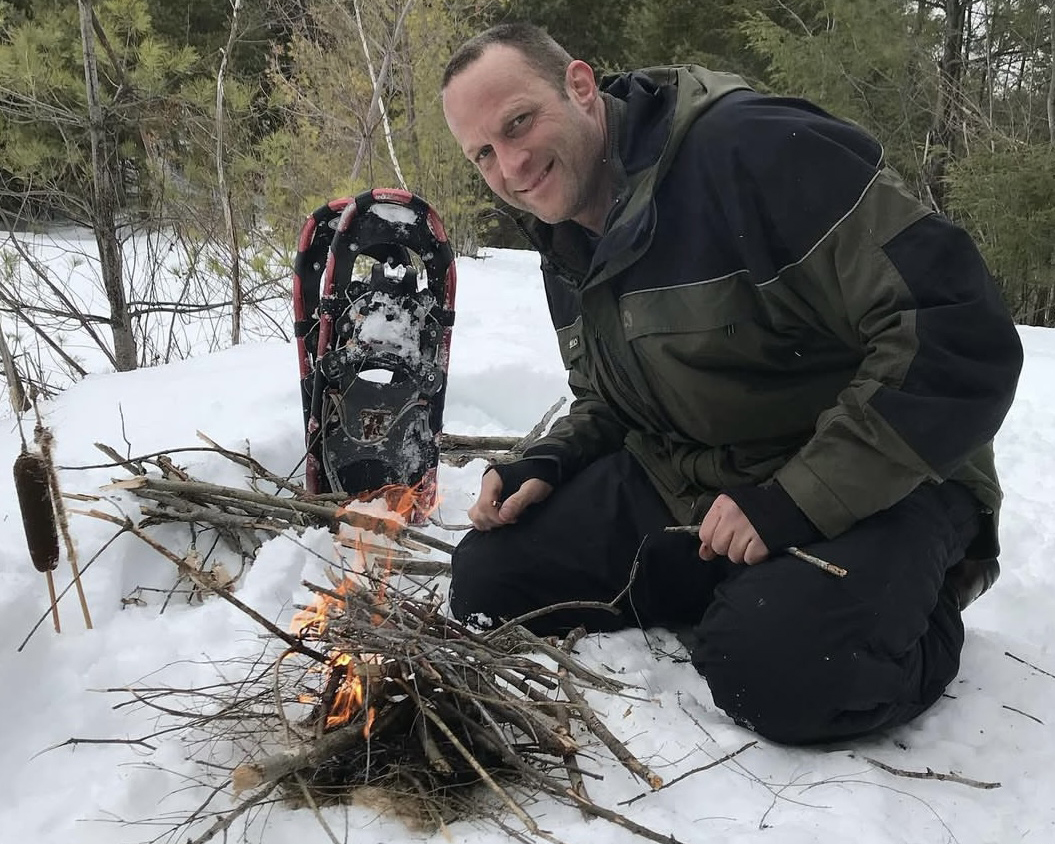
The idea of “survival” often conjures visions of wilderness disasters, roaring bears, or being stranded in the backcountry. But as James Bruchac reminds us, survival is as relevant on a winter road in upstate New York as it is in deep woods or on a mountainside. “Your car breaks down, you’re out in the middle of nowhere… what are you gonna do?” he says, emphasizing how fire, shelter, and situational awareness can be the difference between comfort and catastrophe.
This winter, Bruchac—author, storyteller, animal tracker, world-traveled cultural educator, and lifelong outdoorsman—is reinstating adult survival training at the Ndakinna Education Center in Greenfield Center. It’s a return many have been waiting for.
Raised in Story, Raised in Wilderness
James’s foundation in survival began with stories—real stories, Indigenous stories, and stories connected to the land.
His father, Joseph Bruchac – an award winning Native American author,storyteller, and naturalist – was raised during a time when Native ancestry was often hidden rather than celebrated. Because of that history, starting in his college years, his father sought out elders from his own Abenaki ancestry and among the Mohawk, Onondaga, Oneida, Mohican, Lenape and other surrounding communitites—absorbing culture, wildlife knowledge, and oral tradition, then passing it down to James and his brother.
Before they learned to build fires, they learned what those fires meant.
Before tracking animals, they tracked characters and lessons embedded in stories.
Those lessons quickly moved outdoors. James recalls early days learning plants, trees, tracks, and ecological understanding directly in the woods with his father.
By his teen years, things escalated:
He traveled to the Six Nations Indian Museum to work with John Stokes—a teacher who had lived with Aboriginal communities in Australia. That encounter lit the spark.
“He made stories seem cool again,” James explains.
Soon he was spending summers in New Mexico teaching youth survival skills, then traveling to West Africa with his father to research the Dogon people. Later came Yellowstone, where tracking wolves and grizzlies became more than textbook ideas. He now has thousands of plaster casts of tracks collected through decades of field work.
There’s one plaster cast now hanging in Ndakinna—a grizzly track “about the size of a small pizza,” as James describes it.
Stories became survival, and survival turned into something he could teach.
Survival Isn’t Just for the Backwoods
During the interview, James made a point many people overlook:
Survival skills are everyday skills.
Once you’ve studied tracking, you walk through the backyard differently. You don’t just see footprints—you understand whether a predator or a scavenger is nearby, how fresh it is, and where it went.
Once you’ve learned fire-making, even cattails and birch bark look different.
“You’re never going to look at them the same way again,” he tells listeners.
And yes—dryer lint becomes valuable.
Real survival often has nothing to do with dramatic wilderness rescues. It’s being prepared when the car stalls in subzero weather. It’s knowing what to safely gather. It’s knowing when to stay put versus when to move—like the real-life Saratoga story of someone who stayed in the woods because they “heard trains” and thought that meant rescue was coming.
Situational thinking matters just as much as technique.
Sunday Survival Series Returns
After several years focusing on Ndakinna’s booming martial arts programs, James is bringing back hands-on, beginner-friendly skill development.
Two early courses are confirmed:
Winter Fire-Making Essentials
January 25 | 11:00 AM – 2:30 PM
At Ndakinna Education Center, Greenfield Center
This session is built on the most fundamental winter survival priority—heat.
Participants will learn:
✔ how to properly use fire steels and strike rods
✔ what to carry versus what to find
✔ why winter tinder sources differ
✔ how to legally (and when to ethically break rules) when gathering material
✔ how to safely build and maintain heat
A bow-drill demonstration ends the session, giving participants hands-on experience with primitive fire.
Winter Tracks & Trails
February 22 | 11:00 AM – 2:30 PM
Students will learn to identify animals that pass through their backyards and will explore:
🦊 predator vs. scavenger gait
🐻 safety indicators in tracks
🐾 scat interpretation
🧭 animal behavior patterns
🏞 reading track shape, stride, depth, and direction
James brings thousands of casts, including wolves and black bears—but also the track size distinction that can determine whether you’re following a safe-to-observe animal or a dangerous one.
Then the class heads into the woods to find real trails, with the snow acting as a natural tracking sheet.
Teaching Skills That Make Wilderness Less Dangerous
James is not romantic about survival.
He is enthusiastic—but realistic.
He’s taught kids who later entered Army Ranger, Green Beret, and special forces pipelines. He’s taught engineers, photographers, and teachers. He’s taught parents who want to feel safer hiking with children.
Whether you’re facing cold, animals, getting lost, or basic resource scarcity—skills reduce panic.
As he says plainly:
“Technology fails. Then what are you gonna do?”
Survival isn’t adrenaline.
It’s preparedness.
Sign-Up
Details and registration are available at: NdakinnaCenter.org
Courses are capped for quality and safety, so early registration is recommended.
The return of longer, full day survival treks, and possible overnights are planned for the future. Stay Tuned!
