
Immunotek Plasma: Saving Lives and Supporting Community in Queensbury
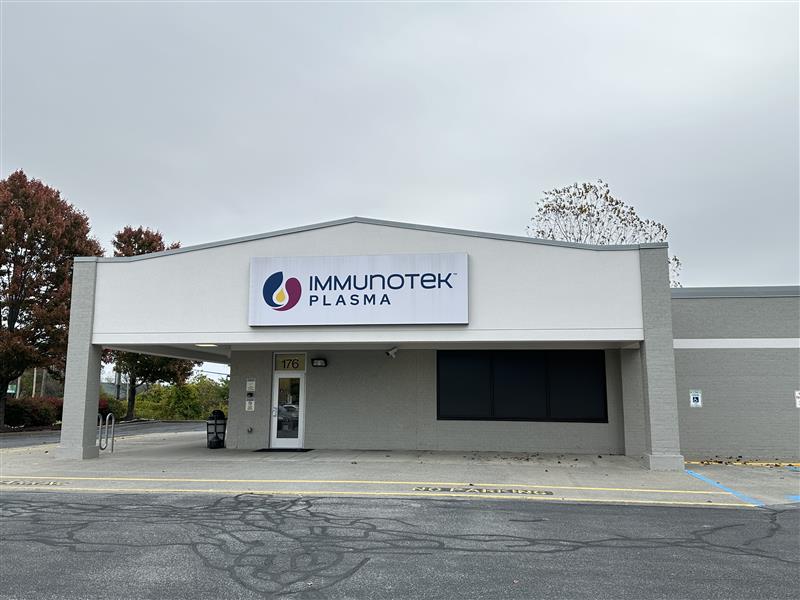
When most people think of medical innovation, their minds go to high-tech hospitals, pharmaceutical breakthroughs, or advanced surgical procedures. Rarely do they consider plasma donation centers tucked inside repurposed storefronts. Yet, in Queensbury, NY, Immunotek Plasma is quietly performing work that impacts not only the local community but also patients across the world.
Ben Ward, Center Director for Immunotek Plasma, relocated from Tennessee earlier this year to lead the Queensbury location. With nearly two decades of experience in the plasma industry, Ward has seen firsthand how critical plasma donations are to global healthcare and how local centers like Queensbury’s make an outsized impact.
What Immunotek Plasma Does
Plasma—the liquid portion of blood—is an irreplaceable resource. It contains vital proteins and antibodies that cannot be manufactured synthetically. Through a process called plasmapheresis, Immunotek safely collects plasma while returning donors’ red cells, white cells, and platelets back to them.
The plasma collected in Queensbury doesn’t stay here. Once donations are screened and frozen at extremely low temperatures, shipments are sent to fractionation plants, such as those operated by pharmaceutical company Grifols in North Carolina. There, plasma is separated into its essential proteins and transformed into life-saving therapies for patients with hemophilia, primary immune deficiencies, and other serious conditions. Plasma is also essential for producing vaccines.
“There’s nothing synthetic out there that can replace plasma,” Ward explained. “To treat one hemophilia patient for a year requires donations from about 1,200 donors.”
The Donation Experience
For donors, the process is straightforward. After presenting identification and undergoing a health screening, they spend 30–60 minutes comfortably reclining while plasma is drawn. Hydration is key; well-hydrated donors often complete the procedure faster and with fewer complications.
Donors can give plasma up to twice within a seven-day period, meaning many are able to contribute ten times a month. Compensation is offered for their time, often adding up to as much as $800–$900 a month for regular donors at maximum weight.
Ward emphasized that compensation is not for the plasma itself but for the donor’s time and commitment. At the end of each visit, funds are loaded onto a prepaid Visa card, offering immediate access. Some donors treat this as supplemental income, using it for car payments, groceries, or even saving for vacations.
The donation process also comes with health benefits. Each donor’s protein levels, blood pressure, and general vitals are regularly checked, giving them a built-in health monitor at no extra cost.
Local Economic Impact
Beyond the medical necessity of plasma, Immunotek provides a significant economic boost to the region. The Queensbury facility employs 11 staff members, with plans to hire more. Ward noted that the company has already paid out more than a million dollars to local donors in a single year.
“That’s money going directly back into the community—groceries, bills, family expenses,” Ward said. “It’s substantial.”
The investment into the facility itself was also significant. Immunotek invested over $5 million to remodel the space, which once housed an Aldi supermarket. Between construction, staffing, and donor compensation, the company has become a steady economic contributor in Warren County.
Growing Awareness in the Northeast
While plasma donation is widely known in southern states, Ward has noticed less awareness in the Northeast. Many locals confuse plasma donation with blood donation or are simply unaware the center exists. “Down south, everyone knows about plasma,” Ward said. “Here, it’s new for a lot of people. Some folks don’t even know we’re open.”
Part of his mission is to raise awareness—explaining the difference between plasma and blood donation, clarifying who is eligible (typically healthy adults aged 18–65), and showing how donations directly help patients worldwide. Expanding operating hours beyond the current 7 a.m. to 2 p.m. window is also a priority, so more working people can participate.
More Than a Business
Though Immunotek is a for-profit company, its impact extends far beyond its bottom line. Plasma donation sits at the intersection of community service and global healthcare. Donors are compensated, patients receive critical treatments, and the local economy benefits from both jobs and supplemental income streams.
Ward describes the work as rewarding, not only because of its medical importance but also because of the relationships built with donors. Many come in twice a week, creating a camaraderie reminiscent of a small-town gathering place. “It’s kind of like being a bartender,” he joked. “You see people regularly, hear about their lives, and build those connections.”
A Global Reach with Local Roots
Immunotek operates 16 centers across 12 states, with its corporate headquarters in Southlake, Texas. The Queensbury location is one of the newest, marking just its second anniversary with a ribbon-cutting hosted by the Adirondack Regional Chamber of Commerce.
For Ward, leading this center is both a professional challenge and a personal mission. Having relocated from the Smoky Mountains to the Adirondacks, he sees parallels between the two regions: scenic, tight-knit communities that thrive on shared effort. His goal is simple but ambitious—to increase plasma donations, spread awareness, and help patients who depend on therapies that only plasma can provide.
“There’s nothing more rewarding than knowing the plasma we collect here goes on to save lives,” Ward reflected. “And at the same time, we’re supporting families right here in Queensbury.”
Conclusion
Immunotek Plasma in Queensbury is more than a donation center; it’s a hub where local generosity meets global need. The center provides supplemental income opportunities for residents, steady employment for staff, and life-saving plasma for patients around the world.
As Ward and his team continue to grow awareness and expand donor participation, the ripple effect of their work will be felt far beyond Quaker Road—stretching from small-town New York to hospitals and clinics across the globe.
